Przejdź do treści
  • Porady tech
  • Gry
  • Mobile
  • Konsole
  • Pogoda
  • Kosmos
  • Koty
  • Pliki
  • Komiksy
  • AI
  • Finanse
Kosmos.porady-tech.pl

Kosmos.porady-tech.pl

Odkrywaj kosmos z Kosmos.porady-tech.pl!

  • Strona główna
  • Kosmos
  • Planety
  • Układ Słoneczny
Jak zostać astronautą w Polsce? Kompletny przewodnik krok po kroku.
2026-03-21 0

Jak zostać astronautą w Polsce? Kompletny przewodnik krok po kroku.

przez Kosmiczna redakcja

Witajcie na pokładzie Odkrywaj kosmos z Kosmos.porady-tech.pl! Dzisiaj zabieramy Was w podróż marzeń, która dla wielu wydaje się odległa jak…

Ile ważyłbyś na Marsie lub Księżycu? Praktyczny przewodnik po grawitacji w Układzie Słonecznym.
2026-03-21 0

Ile ważyłbyś na Marsie lub Księżycu? Praktyczny przewodnik po grawitacji w Układzie Słonecznym.

przez Kosmiczna redakcja

Dziś zajmiemy się tematem, który rozpala wyobraźnię wielu: ile ważyłbyś na innych ciałach niebieskich w naszym Układzie Słonecznym? Odpowiedź jest…

Jak chronić Ziemię przed asteroidami? Poznaj tarcze obrony planetarnej i przyszłe technologie.
2026-03-21 0

Jak chronić Ziemię przed asteroidami? Poznaj tarcze obrony planetarnej i przyszłe technologie.

przez Kosmiczna redakcja

Witajcie na pokładzie Odkrywaj kosmos z Kosmos.porady-tech.pl! Dziś zajmiemy się tematem, który może wydawać się jak science fiction, ale jest…
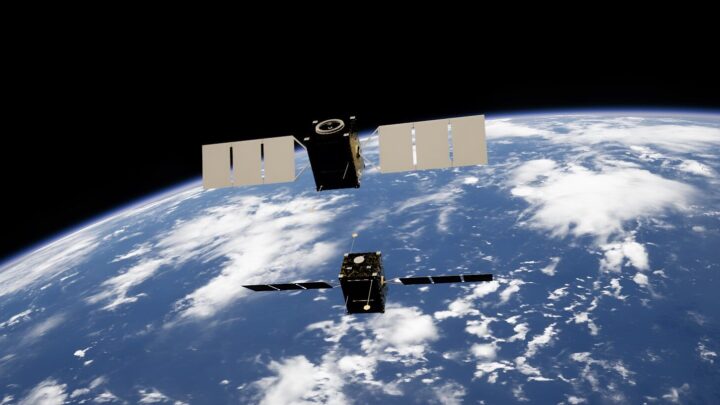
Jak działają satelity komunikacyjne? Sekrety łączności z kosmosu.
2026-03-21 0

Jak działają satelity komunikacyjne? Sekrety łączności z kosmosu.

przez Kosmiczna redakcja

Dziś zabierzemy Was w podróż, która pozwoli zrozumieć, jak działa technologia umożliwiająca nam globalną komunikację – satelity. Jak działają satelity…
Jak przygotować się do obserwacji nocnego nieba? Podstawy dla początkujących astronomów.
2026-03-21 0

Jak przygotować się do obserwacji nocnego nieba? Podstawy dla początkujących astronomów.

przez Kosmiczna redakcja

Cześć, entuzjaści kosmosu! Czy marzycie o tym, by oderwać wzrok od codzienności i zanurzyć się w bezkresie gwiazd? Przygotowanie się…
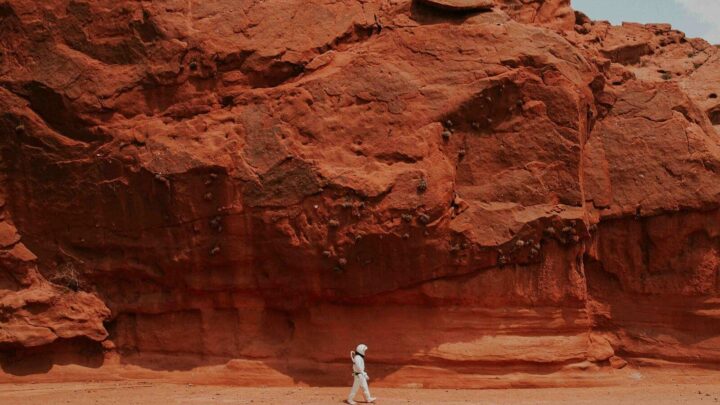
Co zabrać na Marsa? Niezbędnik przyszłego kolonizatora Czerwonej Planety.
2026-03-21 0

Co zabrać na Marsa? Niezbędnik przyszłego kolonizatora Czerwonej Planety.

przez Kosmiczna redakcja

Dziś przenosimy się myślami na Czerwoną Planetę. Wielu z nas marzy o kolonizacji Marsa, ale co naprawdę trzeba zabrać, by…

Czy czas płynie inaczej w kosmosie? Zrozum, jak teoria względności zmienia naszą perspektywę.
2026-03-21 0

Czy czas płynie inaczej w kosmosie? Zrozum, jak teoria względności zmienia naszą perspektywę.

przez Kosmiczna redakcja

Tak, czas płynie inaczej w kosmosie. To nie jest fantazja rodem z filmów science fiction, lecz naukowo udowodniony fakt, wynikający…
Jak astronauci korzystają z toalety w kosmosie? Tajemnice higieny na orbicie.
2026-03-21 0

Jak astronauci korzystają z toalety w kosmosie? Tajemnice higieny na orbicie.

przez Kosmiczna redakcja

Większość z nas na Ziemi nie zastanawia się nad prozaiczną czynnością, jaką jest korzystanie z toalety. W kosmosie staje się…

Misje kosmiczne 2026 – co nas czeka w Układzie Słonecznym?
2026-01-22 0

Misje kosmiczne 2026 – co nas czeka w Układzie Słonecznym?

przez Kosmiczna redakcja

Rok 2026 zapowiada się jako przełomowy dla badań kosmicznych i eksploracji Układu Słonecznego. Po latach intensywnej pracy nad statkami, lądownikami…

Dlaczego rakiety startują na wschód? Prosta odpowiedź: Ziemia daje „darmową” prędkość
2025-12-30 0

Dlaczego rakiety startują na wschód? Prosta odpowiedź: Ziemia daje „darmową” prędkość

przez Kosmiczna redakcja

Bo Ziemia obraca się z zachodu na wschód, a wszystko, co znajduje się na jej powierzchni, już porusza się w…

Jaka jest prędkość ucieczki z Ziemi? Wartości dla Ziemi, Księżyca i Drogi Mlecznej
2025-12-30 0

Jaka jest prędkość ucieczki z Ziemi? Wartości dla Ziemi, Księżyca i Drogi Mlecznej

przez Kosmiczna redakcja

Co to jest prędkość ucieczki? Prędkość ucieczki to minimalna prędkość, jaką trzeba nadać obiektowi w danym punkcie (np. na powierzchni…

Kim jest Sławosz Uznański‑Wiśniewski?
2025-06-26 0

Kim jest Sławosz Uznański‑Wiśniewski?

przez Kosmiczna redakcja

Wykształcenie i kariera naukowa Praca w CERN i zaangażowanie w technologie kosmiczne Droga do zostania astronautą Misja Axiom Mission 4 „Ignis”…

Czy astronauci mogą zabrać jedzenie z Polski?
2025-06-26 0

Czy astronauci mogą zabrać jedzenie z Polski?

przez Kosmiczna redakcja

Tak, astronauci mogą zabrać jedzenie z Polski na pokład Międzynarodowej Stacji Kosmicznej (ISS), o ile spełnia ono rygorystyczne normy bezpieczeństwa…
Gdzie w kosmosie jest lit? Odkrycia i tajemnice tej niezwykłej substancji
2025-04-16 1

Gdzie w kosmosie jest lit? Odkrycia i tajemnice tej niezwykłej substancji

przez Kosmiczna redakcja

Lit to jedno z najlżejszych pierwiastków chemicznych, który odgrywa istotną rolę zarówno na Ziemi, jak i w przestrzeni kosmicznej. Jego…

Stronicowanie wpisów

Poprzednie 1 … 37 38 39 40 Następne

FILMY NASA

Film na YouTubie UCLA_DiR1FfKNvjuUpBHmylQ_4h884umjihw After 241 days in orbit, astronaut Chris Williams is returning home from his first mission to the International Space Station.

Williams, along with cosmonauts Sergey Kud-Sverchkov and Sergei Mikaev, will touch down on Earth at 6:25 a.m. EDT (1025 UTC) in their Soyuz spacecraft after undocking from the station earlier on July 26. After landing on the steppe of Kazakhstan, they will fly by helicopter to Karaganda, Kazakhstan. 

During his time in space, Williams orbited the Earth 3,856 times, went on two spacewalks, and supported numerous experiments that are helping us learn how to live in space while making life better back on our home planet.

Learn more about Chris Williams: https://www.nasa.gov/people/nasa-astronaut-christopher-l-williams/
Follow the latest updates from the International Space Station: https://blogs.nasa.gov/spacestation/

Credit: NASA
After 241 days in orbit, astronaut Chris Williams is returning home from his first mission to the International Space Station.

Williams, along with cosmonauts Sergey Kud-Sverchkov and Sergei Mikaev, will touch down on Earth at 6:25 a.m. EDT (1025 UTC) in their Soyuz spacecraft after undocking from the station earlier on July 26. After landing on the steppe of Kazakhstan, they will fly by helicopter to Karaganda, Kazakhstan. 

During his time in space, Williams orbited the Earth 3,856 times, went on two spacewalks, and supported numerous experiments that are helping us learn how to live in space while making life better back on our home planet.

Learn more about Chris Williams: https://www.nasa.gov/people/nasa-astronaut-christopher-l-williams/
Follow the latest updates from the International Space Station: https://blogs.nasa.gov/spacestation/

Credit: NASA
NASA Astronaut Chris Williams Soyuz MS-28 Re-entry and Landing
The four members of NASA's SpaceX Crew-13 mission to the International Space Station, targeted to launch no earlier than mid-September, are talking about their upcoming journey in a news conference from NASA's Johnson Space Center.

Meet the crew:
- Jessica Watkins, commander, NASA 
- Luke Delaney, pilot, NASA 
- Joshua Kutryk, mission specialist, CSA 
- Sergey Teteryatnikov, mission specialist, Roscosmos 

Learn more about the mission: https://www.nasa.gov/commercialcrew
Get daily updates from the station: https://www.nasa.gov/blogs/spacestation/

Credit: NASA
NASA's SpaceX Crew-13 Flight Crew News Conference (Aug. 3, 2026)
Leaders from NASA and agency partners are holding a news conference at NASA's Johnson Space Center to discuss final preparations for our upcoming SpaceX Crew-13 mission to the International Space Station, targeted to launch no earlier than mid-September. 

Participants include:
- Joel Montalbano, deputy associate administrator, Human Spaceflight Mission Directorate, NASA Headquarters
- Dana Weigel, manager, Low Earth Orbit Program, NASA Johnson
- Mathieu Caron, director, Astronauts, Life Sciences, and Space Medicine, CSA
- Julianna Scheiman, director, NASA Science and Dragon Programs, SpaceX

Learn more about the mission: https://www.nasa.gov/commercialcrew
Get daily updates from the station: https://www.nasa.gov/blogs/spacestation/

Credit: NASA
NASA's SpaceX Crew-13 Mission Overview News Conference (Aug. 3, 2026)
Tune in as we preview the Nancy Grace Roman Space Telescope mission one month ahead of its scheduled launch on Aug. 30! Experts from NASA are providing an overview of the mission and its current status:

- Shawn Domagal-Goldman, director, Astrophysics Division, NASA Headquarters 
- Jackie Townsend, Roman telescope project manager, NASA’s Goddard Space Flight Center
- Julie McEnery, Roman telescope senior project scientist, NASA Goddard 
- Jeremy Perkins, Roman telescope integration and test scientist, NASA Goddard 

Named after NASA’s first chief astronomer, the Nancy Grace Roman Space Telescope will have a deep, panoramic view of the cosmos, generating never-before-seen pictures that will revolutionize our understanding of the universe.

Learn more about Roman: https://science.nasa.gov/mission/roman-space-telescope/

Credit: NASA
Nancy Grace Roman Space Telescope Mission Preview News Conference (July 29, 2026)
Watch as NASA astronaut Chris Williams and Roscosmos cosmonauts Sergey Kud-Sverchkov and Sergei Mikaev begin their return voyage to Earth. 

The Soyuz MS-28 spacecraft is scheduled to undock from the International Space Station at 3:03 a.m. EDT (0703 UTC), with an expected landing time of 6:25 a.m. EDT (1025 UTC).

Learn more about the International Space Station: https://www.nasa.gov/station

Credit: NASA
NASA Astronaut Chris Williams Soyuz MS-28 Undocking
Watch as NASA astronaut Chris Williams wraps up an 8-month mission aboard the International Space Station by exchanging farewells before departure. This was his first mission to space.

He and Roscosmos cosmonauts Sergey Kud-Sverchkov and Sergei Mikaev will then enter the Soyuz MS-28 spacecraft. 

After the hatch is closed, the spacecraft is scheduled to undock from the orbiting laboratory’s Rassvet module at 3:03 a.m. EDT (0703 UTC) Sunday, July 26, heading for a parachute-assisted landing at 6:25 a.m. EDT (1025 UTC) on the steppe of Kazakhstan.

Learn more about the International Space Station: https://www.nasa.gov/station
 
Credit: NASA
NASA Astronaut Chris Williams Soyuz MS-28 Space Station Farewells and Hatch Closing
As MS-28 prepares to depart from the space station, Roscosmos cosmonaut Sergey Kud-Sverchkov hands command of the orbiting outpost to NASA astronaut Jessica Meir.

Following MS-28's departure on Sunday, July 26, NASA astronaut Chris Williams and Roscosmos cosmonauts Sergey Kud-Sverchkov and Sergei Mikaev are scheduled to land on the steppe of Kazakhstan that same day at approximately 6:25 a.m. EDT (1025 UTC).

Follow the latest space station updates: https://www.nasa.gov/blogs/spacestation/

Credit: NASA
International Space Station Change of Command Ceremony
Watch with us as a new trio is welcomed aboard the International Space Station, after their Soyuz spacecraft hatch opens at 3:55pm ET (1955 UTC), Tuesday, July 14. NASA astronaut Anil Menon and cosmonauts Pyotr Dubrov and Anna Kikina will spend about eight months aboard the orbital complex, advancing scientific research.

This is the first spaceflight for Menon, who was selected by NASA to join the 2021 Astronaut Candidate Class and reported for duty in January 2022. 

Get the latest mission updates: https://blogs.nasa.gov/spacestation/

Credit: NASA
NASA Astronaut Anil Menon Soyuz MS-29 Hatch Opening
After lifting off from the Baikonur Cosmodrome in Kazakhstan aboard a Soyuz MS-29 spacecraft, NASA astronaut Anil Menon is scheduled to dock with the International Space Station at 1:56 p.m. EDT (1756 UTC) on Tuesday, July 14.
 
Selected as a candidate in 2021, Menon graduated with the 23rd astronaut class in 2024. This is Menon's first mission to the orbiting lab.
 
Menon, along with Roscosmos cosmonauts Pyotr Dubrov and Anna Kikina, will spend eight months aboard the space station as part of Expeditions 74 and 75. During his stay on the station, Menon will conduct scientific research and technology demonstrations aimed at advancing human space exploration and benefiting life on Earth.

Get the latest mission updates: https://blogs.nasa.gov/spacestation/
 
Credit: NASA
NASA Astronaut Anil Menon Soyuz MS-29 Docking

ISS NA ŻYWO

KOMENTARZE

  1. sonic_orbit - Czy Księżyc się obraca? Prawda o ruchu naturalnego satelity Ziemi2025-12-30

    Wiele osób myli „nie obraca się” z „obraca się razem z orbitą”.

  2. Richardimmig - Gdzie w kosmosie jest lit? Odkrycia i tajemnice tej niezwykłej substancji2025-06-25

    Potężna rakieta

  3. Serwisy Edukacyjne - Czy Saturn ma powierzchnię?2024-03-01

    Niezmiernie imponujące jest, jak autor potrafi nie tylko przekazywać informacje, ale także malować słowami pejzaże myśli, tworząc tekstu, które są…

  4. katrice - Dlaczego Słońce świeci?2024-01-04

    Intrygująca lektura! Informacje na temat zjawisk astronomicznych są bardzo pouczające. Szczególnie podobała mi się sekcja dotycząca rejestrowania zjawisk astronomicznych. Twoja…

  5. therington - Dlaczego Słońce świeci?2023-12-30

    Trudno znaleźć doświadczonych ludzi w tej dziedzinie, ale wydajesz się wiedzieć, o czym mówisz! Dzięki! Is this conversation helpful so…

FAZY KSIĘŻYCA

Moon Loading...

KATEGORIE

  • Astronauci
  • Galaktyki
  • Jowisz
  • Kosmos
  • Księżyc
  • Mars
  • Pierwiastki
  • Planety
  • Polacy w kosmosie
  • Rakiety
  • Saturn
  • Tajemnice
  • Układ Słoneczny
  • Wielki wybuch
  • Ziemia
kosmos.porady-tech.pl 2026
Kontakt: info@porady-tech.pl
Sprawdź także: porady-tech.pl | mobile.porady-tech.pl | pogoda.porady-tech.pl | gry.porady-tech.pl | koty.porady-tech.pl | pliki.porady-tech.pl