Przejdź do treści
  • Porady tech
  • Gry
  • Mobile
  • Konsole
  • Pogoda
  • Kosmos
  • Koty
  • Pliki
  • Komiksy
  • AI
  • Finanse
Kosmos.porady-tech.pl

Kosmos.porady-tech.pl

Odkrywaj kosmos z Kosmos.porady-tech.pl!

  • Strona główna
  • Kosmos
  • Planety
  • Układ Słoneczny
Enceladus – Księżyc, na którym może być życie? Naukowe odkrycia i możliwości
2023-06-30 0

Enceladus – Księżyc, na którym może być życie? Naukowe odkrycia i możliwości

przez Kosmiczna redakcja

Enceladus, jeden z księżyców Saturna, od dawna budzi zainteresowanie naukowców ze względu na potencjalne warunki sprzyjające istnieniu życia. W tym…
Czy Saturn ma powierzchnię?
2023-06-23 1

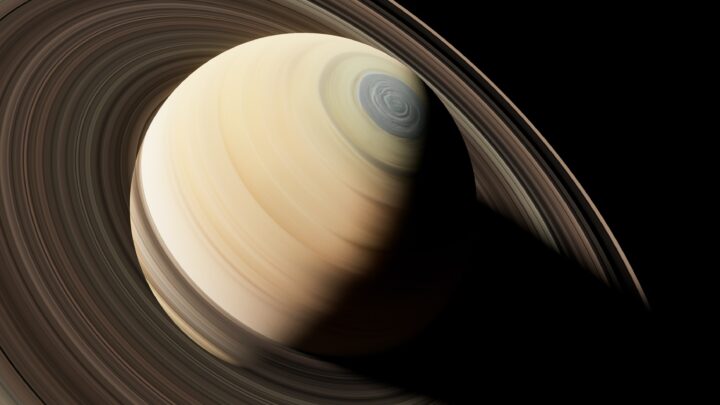
Czy Saturn ma powierzchnię?

przez Kosmiczna redakcja

Saturn, jeden z najbardziej rozpoznawalnych obiektów na niebie, zawsze budził ciekawość i fascynację. Jednym z pytań, które często się pojawia,…

Czy Jowisz ma pierścienie?
2023-06-23 0

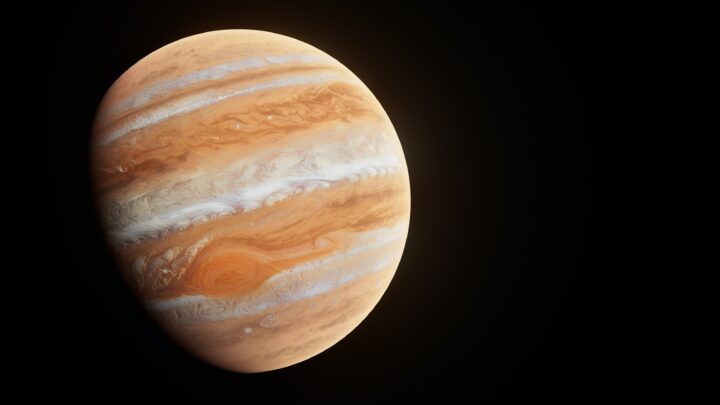
Czy Jowisz ma pierścienie?

przez Kosmiczna redakcja

Jowisz, największa planeta naszego Układu Słonecznego, od dawna budzi zainteresowanie badaczy i entuzjastów astronomii. Wielu z nas zastanawia się, czy…

Ile jest astronautów na świecie?
2023-06-23 0

Ile jest astronautów na świecie?

przez Kosmiczna redakcja

Astronautyka to jedna z najbardziej fascynujących dziedzin eksploracji kosmosu. Od momentu pierwszego lotu człowieka w kosmos, pytanie o liczbę astronautów…

Wielki Wybuch (kosmos)
2023-06-23 0

Wielki Wybuch (kosmos)

przez Kosmiczna redakcja

Wielki Wybuch to jedno z najważniejszych wydarzeń w historii naszego wszechświata. To właśnie w tym momencie, według obecnie panującej teorii,…

Ile jest wszechświatów?
2023-06-23 0

Ile jest wszechświatów?

przez Kosmiczna redakcja

Pytanie, ile jest wszechświatów, to jedno z najbardziej porywających zagadek, które stawia przed nami kosmos. Od wieków ludzie poszukują odpowiedzi…

Czarna dziura – ciekawostki
2023-06-23 0

Czarna dziura – ciekawostki

przez Kosmiczna redakcja

Czarna dziura – to termin, który wzbudza fascynację i tajemniczość wśród wielu osób. Te kosmiczne giganty, których grawitacja jest na…

Gdzie najdalej dotarł człowiek w kosmosie?
2023-06-22 0

Gdzie najdalej dotarł człowiek w kosmosie?

przez Kosmiczna redakcja

Podążając za swoją nieustanną chęcią eksploracji i odkrywania, człowiek od lat stawiał sobie cele podróży w kosmos. Jednym z fascynujących…

Dlaczego Słońce świeci?
2023-06-22 3

Dlaczego Słońce świeci?

przez Kosmiczna redakcja

Słońce, nasza bliska gwiazda, od wieków fascynuje ludzkość swoim potężnym i niezwykłym światłem. Ale jak dokładnie Słońce świeci? W tym…

Czy Księżyc się obraca? Prawda o ruchu naturalnego satelity Ziemi
2023-06-21 2

Czy Księżyc się obraca? Prawda o ruchu naturalnego satelity Ziemi

przez Kosmiczna redakcja

Księżyc od wieków fascynuje ludzkość swoim pięknem i tajemniczością. Jednym z najbardziej intrygujących pytań, które często pojawiają się w kontekście…

Stronicowanie wpisów

Poprzedni 1 … 15 16

FILMY NASA

Film na YouTubie UCLA_DiR1FfKNvjuUpBHmylQ_7FJUz-54AX0 We're launching three tons of food, fuel, and supplies to the International Space Station. Watch live with us.

The unpiloted Progress 95 resupply spacecraft is scheduled to lift off at 6:21 p.m. EDT (2221 UTC) on Saturday, April 25, on a Soyuz rocket from the Baikonur Cosmodrome in Kazakhstan. After liftoff, Progress 95 will travel to the space station, a trip that takes two days. Once there, it will dock autonomously to the orbiting laboratory. 

For more than 25 years, people have lived and worked continuously aboard the International Space Station, advancing scientific knowledge and making research breakthroughs that aren’t possible on Earth. The space station helps NASA understand and overcome the challenges of human spaceflight, expand commercial opportunities in low Earth orbit, and build on the foundation for long-duration missions to the Moon, as part of the Artemis program, and to Mars. 
 
Learn more about the International Space Station, its research, and crew at: https://www.nasa.gov/station

Credit: NASA
We're launching three tons of food, fuel, and supplies to the International Space Station. Watch live with us.

The unpiloted Progress 95 resupply spacecraft is scheduled to lift off at 6:21 p.m. EDT (2221 UTC) on Saturday, April 25, on a Soyuz rocket from the Baikonur Cosmodrome in Kazakhstan. After liftoff, Progress 95 will travel to the space station, a trip that takes two days. Once there, it will dock autonomously to the orbiting laboratory. 

For more than 25 years, people have lived and worked continuously aboard the International Space Station, advancing scientific knowledge and making research breakthroughs that aren’t possible on Earth. The space station helps NASA understand and overcome the challenges of human spaceflight, expand commercial opportunities in low Earth orbit, and build on the foundation for long-duration missions to the Moon, as part of the Artemis program, and to Mars. 
 
Learn more about the International Space Station, its research, and crew at: https://www.nasa.gov/station

Credit: NASA
Progress 95 Cargo Ship Launch
Our new flagship telescope is fully assembled. Come find out what it will discover.

We're hosting a news conference at NASA’s Goddard Space Flight Center in Greenbelt, Maryland, to talk about our Nancy Grace Roman Space Telescope, which recently completed construction and is wrapping up prelaunch testing.

Participants include:
- NASA Administrator Jared Isaacman
- Nicky Fox, associate administrator, Science Mission Directorate, NASA Headquarters, Washington
- Jamie Dunn, Roman telescope project manager, NASA Goddard
- Julie McEnery, Roman telescope senior project scientist, NASA Goddard

Named after NASA’s first chief astronomer, the Nancy Grace Roman Space Telescope will have a deep, panoramic view of the cosmos, generating never-before-seen pictures that will revolutionize our understanding of the universe. Roman will also showcase cutting-edge technology, including a test of the most advanced technology ever flown in space to directly image planets around nearby stars, a key step in NASA’s search for life on other worlds.

Learn more: https://www.nasa.gov/news-release/nasa-to-unveil-complete-roman-telescope-host-media-briefing/

Credit: NASA
NASA News Conference: Nancy Grace Roman Space Telescope is Complete
"Would you look at that, man!"

As Artemis II flew around the Moon on April 6, 2026, traveling further from Earth than any humans in history, mission commander Reid Wiseman captured this video of Earthset with his smartphone. 

The sound you hear in the background is the shutter of mission specialist Christina Koch's camera as she captured photos of the moment. See more photos and videos from Artemis II: https://www.nasa.gov/artemis-ii-multimedia/

Credit: NASA
Artemis II Watches Earth Set Behind the Moon
For 250 years, America has pushed the boundaries of what’s possible. From the earliest days of exploration, to the first steps on the Moon and the missions shaping our future, NASA represents the spirit of discovery that defines our nation.

As the United States approaches its semiquincentennial, Freedom 250 highlights how innovation, courage, and scientific leadership have carried America forward — and how NASA continues to expand the frontier for the next generation.

Credit: NASA
NASA Celebrates America’s 250th Birthday
Our Artemis II mission concluded its historic flight around the Moon on April 10, 2026. Among its many milestones, Artemis II surpassed Apollo 13's record for the farthest crewed spaceflight from Earth.

We laughed, we cried, and we pushed the boundaries of what’s possible, setting the stage for future innovation and exploration.
 
We’re just getting started.

Under Artemis, NASA will send astronauts on increasingly difficult missions to explore more of the Moon for scientific discovery, economic benefits, and to build on our foundation for the first crewed missions to Mars.

Learn more about future Artemis missions: https://www.nasa.gov/humans-in-space/artemis/

Download this video: https://images.nasa.gov/details/Welcome%20Home,%20Artemis%20II%20%28Official%20NASA%20Recap%29

Credit: NASA
Welcome Home, Artemis II (Official NASA Recap)
With the Artemis II mission, four astronauts transitioned from years of training to mission-ready reality. The second episode of our NASA+ "Moonbound" series explores the physical and mental challenges of preparing for a crewed flight around the Moon, and the teamwork required to test new systems at the edge of exploration.

Under Artemis, NASA will send astronauts on increasingly difficult missions to explore more of the Moon for scientific discovery, economic benefits, and to build on our foundation for the first crewed missions to Mars.

Credit: NASA
Moonbound Episode 2 | For All Humanity
Artemis II and its test flight around the Moon transformed plans and preparation into execution and exploration. The first episode of our NASA+ documentary series, "Moonbound," explores how NASA prepared to launch new systems and hardware for lunar exploration for the first time with crew.

Under Artemis, NASA will send astronauts on increasingly difficult missions to explore more of the Moon for scientific discovery, economic benefits, and to build on our foundation for the first crewed missions to Mars.

Credit: NASA
Moonbound Episode 1 | Charting the Course
NASA’s mobile launcher is on the move as teams prepare for the upcoming Artemis III mission. 

The massive structure will begin to roll back atop the crawler transporter to the Vehicle Assembly Building at Kennedy Space Center on April 16, marking an important step in ongoing upgrades, system checks, and mission preparations. This journey highlights the incredible engineering behind Artemis infrastructure and the work underway to return astronauts to the lunar surface.

Under Artemis, NASA will send astronauts on increasingly difficult missions to explore more of the Moon for scientific discovery, economic benefits, and to build on our foundation for the first crewed missions to Mars.

Read the latest Artemis updates: https://www.nasa.gov/blogs/artemis/

Credit: NASA
Official Static Feed: NASA's Mobile Launcher on the Move (April 17, 2026)
NASA Administrator Jared Isaacman introduces NASA Force, a new initiative to bring highly skilled engineers, technologists, and innovators into the agency during a new Golden Age of space exploration.

In partnership with the United States Office of Personnel Management and Director Scott Kupor, NASA Force offers 1–2 year appointments with opportunities for extension across critical roles at NASA.

Participants will help advance human spaceflight, aeronautics, and scientific discovery while strengthening the technical depth that powers NASA’s missions.

Learn more and explore opportunities at USAJobs or https://www.nasa.gov/careers/nasaforce/
NASA Force: The Next Era of NASA Starts with You

ISS NA ŻYWO

KOMENTARZE

  1. sonic_orbit - Czy Księżyc się obraca? Prawda o ruchu naturalnego satelity Ziemi2025-12-30

    Wiele osób myli „nie obraca się” z „obraca się razem z orbitą”.

  2. Richardimmig - Gdzie w kosmosie jest lit? Odkrycia i tajemnice tej niezwykłej substancji2025-06-25

    Potężna rakieta

  3. Serwisy Edukacyjne - Czy Saturn ma powierzchnię?2024-03-01

    Niezmiernie imponujące jest, jak autor potrafi nie tylko przekazywać informacje, ale także malować słowami pejzaże myśli, tworząc tekstu, które są…

  4. katrice - Dlaczego Słońce świeci?2024-01-04

    Intrygująca lektura! Informacje na temat zjawisk astronomicznych są bardzo pouczające. Szczególnie podobała mi się sekcja dotycząca rejestrowania zjawisk astronomicznych. Twoja…

  5. therington - Dlaczego Słońce świeci?2023-12-30

    Trudno znaleźć doświadczonych ludzi w tej dziedzinie, ale wydajesz się wiedzieć, o czym mówisz! Dzięki! Is this conversation helpful so…

FAZY KSIĘŻYCA

Moon Loading...

KATEGORIE

  • Astronauci
  • Galaktyki
  • Jowisz
  • Kosmos
  • Księżyc
  • Mars
  • Pierwiastki
  • Planety
  • Polacy w kosmosie
  • Rakiety
  • Saturn
  • Tajemnice
  • Układ Słoneczny
  • Wielki wybuch
  • Ziemia
kosmos.porady-tech.pl 2026
Kontakt: info@porady-tech.pl
Sprawdź także: porady-tech.pl | mobile.porady-tech.pl | pogoda.porady-tech.pl | gry.porady-tech.pl | koty.porady-tech.pl | pliki.porady-tech.pl