Przejdź do treści
  • Porady tech
  • Gry
  • Mobile
  • Konsole
  • Pogoda
  • Kosmos
  • Koty
  • Pliki
  • Komiksy
  • AI
  • Finanse
Kosmos.porady-tech.pl

Kosmos.porady-tech.pl

Odkrywaj kosmos z Kosmos.porady-tech.pl!

  • Strona główna
  • Kosmos
  • Planety
  • Układ Słoneczny
Jak długo człowiek może przetrwać w kosmosie? Granice ludzkiej wytrzymałości
2026-03-30 0

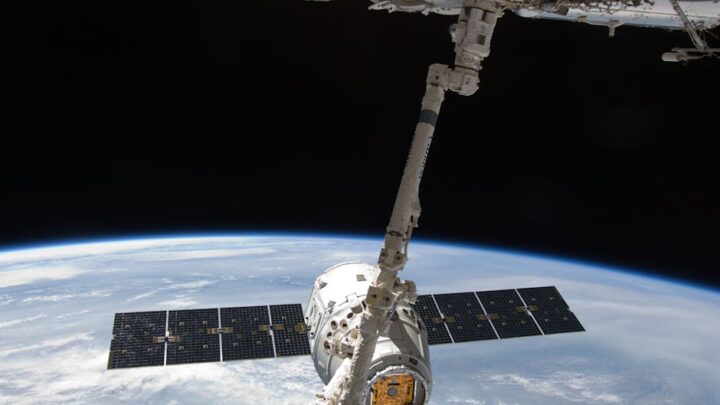
Jak długo człowiek może przetrwać w kosmosie? Granice ludzkiej wytrzymałości

przez Kosmiczna redakcja

Witajcie, odkrywcy kosmosu! Wielu z Was z pewnością zastanawia się, jak długo człowiek może przetrwać w kosmosie. Odpowiedź jest prosta…
Jak duża jest Droga Mleczna i co się w niej znajduje? Przewodnik po naszej galaktyce
2026-03-30 0

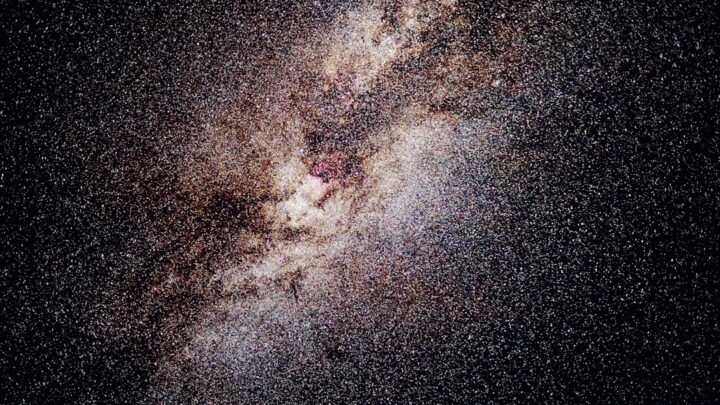
Jak duża jest Droga Mleczna i co się w niej znajduje? Przewodnik po naszej galaktyce

przez Kosmiczna redakcja

Czy kiedykolwiek zastanawialiście się, jak ogromna jest i co tak naprawdę kryje się w jej bezkresnych przestworzach? Przygotujcie się na…

Jak wygląda dzień astronauty na Międzynarodowej Stacji Kosmicznej? Życie i praca w zerowej grawitacji.
2026-03-29 0

Jak wygląda dzień astronauty na Międzynarodowej Stacji Kosmicznej? Życie i praca w zerowej grawitacji.

przez Kosmiczna redakcja

Witajcie na blogu Odkrywaj Kosmos z Kosmos.porady-tech.pl! Jako eksperci od kosmosu, dziś zabieramy Was w niezwykłą podróż, aby zajrzeć za…

Jak działa teleskop kosmiczny Jamesa Webba i co już odkrył? Rewolucja w astronomii.
2026-03-29 0

Jak działa teleskop kosmiczny Jamesa Webba i co już odkrył? Rewolucja w astronomii.

przez Kosmiczna redakcja

Cześć, kosmiczni odkrywcy! Przygotujcie się na podróż w głąb Wszechświata, bo dziś porozmawiamy o maszynie, która na nowo definiuje nasze…

Jak powstają meteory i czym różnią się od meteoroidów i meteorytów? Kosmiczne skały nad nami.
2026-03-29 0

Jak powstają meteory i czym różnią się od meteoroidów i meteorytów? Kosmiczne skały nad nami.

przez Kosmiczna redakcja

Witajcie na pokładzie Odkrywaj kosmos z Kosmos.porady-tech.pl! Dziś zagłębimy się w temat kosmicznych skał, które od wieków fascynują ludzkość. Zastanawialiście…

Co to są egzoplanety i czy może istnieć na nich życie? Najnowsze odkrycia i teorie.
2026-03-29 0

Co to są egzoplanety i czy może istnieć na nich życie? Najnowsze odkrycia i teorie.

przez Kosmiczna redakcja

Egzoplanety to nic innego jak planety krążące wokół gwiazd innych niż nasze Słońce. W ostatnich dekadach potwierdziliśmy istnienie ponad 5000…

Czy na Księżycu są lód i woda? Misje poszukujące zasobów kluczowych dla przyszłych baz.
2026-03-29 0

Czy na Księżycu są lód i woda? Misje poszukujące zasobów kluczowych dla przyszłych baz.

przez Kosmiczna redakcja

Tak, na Księżycu definitywnie znajduje się woda, choć nie w postaci jezior czy rzek, jak na Ziemi, lecz głównie jako…

Czy na Wenus występują ekstremalne warunki? Dlaczego jest tak gorąco i co to oznacza dla przyszłych misji?
2026-03-29 0

Czy na Wenus występują ekstremalne warunki? Dlaczego jest tak gorąco i co to oznacza dla przyszłych misji?

przez Kosmiczna redakcja

Czy na Wenus występują ekstremalne warunki? Absolutnie tak! Wenus to synonim piekła, a jej warunki powierzchniowe są jednymi z najbardziej…

Co to jest Droga Mleczna i gdzie znajduje się w niej Słońce? Przewodnik po naszej galaktyce.
2026-03-29 0

Co to jest Droga Mleczna i gdzie znajduje się w niej Słońce? Przewodnik po naszej galaktyce.

przez Kosmiczna redakcja

Zastanawialiście się kiedyś, co to właściwie jest ta Droga Mleczna i gdzie w niej ukrywa się nasze Słońce? Odpowiedź jest…

Czym jest zorza polarna i jak ją zobaczyć z Polski? Poradnik dla obserwatorów.
2026-03-29 0

Czym jest zorza polarna i jak ją zobaczyć z Polski? Poradnik dla obserwatorów.

przez Kosmiczna redakcja

Zorza polarna to spektakularne zjawisko świetlne, które powstaje, gdy naładowane cząstki ze Słońca (tzw. wiatr słoneczny) zderzają się z atomami…

Jak Polacy przyczyniają się do eksploracji kosmosu? Od naukowców po inżynierów.
2026-03-29 0

Jak Polacy przyczyniają się do eksploracji kosmosu? Od naukowców po inżynierów.

przez Kosmiczna redakcja

Witajcie, miłośnicy kosmosu! Dzisiaj zabierzemy Was w podróż, która udowodni, że Polska ma swój znaczący wkład w eksplorację kosmosu, a…

Jak długo trwa rok na innych planetach Układu Słonecznego? Fascynujące różnice w czasie.
2026-03-29 0

Jak długo trwa rok na innych planetach Układu Słonecznego? Fascynujące różnice w czasie.

przez Kosmiczna redakcja

Dziś zanurkujemy w fascynujące różnice w postrzeganiu czasu poza naszą Błękitną Planetą. Jak długo trwa rok na innych planetach Układu…

Fazy Księżyca: Dlaczego Księżyc zmienia swój wygląd na nocnym niebie?
2026-03-28 0

Fazy Księżyca: Dlaczego Księżyc zmienia swój wygląd na nocnym niebie?

przez Kosmiczna redakcja

Czy kiedykolwiek zastanawiałeś się, dlaczego Księżyc co noc prezentuje się inaczej, raz jako cienki sierp, innym razem jako pełna, świetlista…

Kiedy i jak skolonizujemy Marsa? Plany, wyzwania i przyszłość życia na Czerwonej Planecie.
2026-03-28 0

Kiedy i jak skolonizujemy Marsa? Plany, wyzwania i przyszłość życia na Czerwonej Planecie.

przez Kosmiczna redakcja

Witajcie, miłośnicy kosmosu i technologii, na blogu Odkrywaj kosmos z Kosmos.porady-tech.pl! Dzisiaj zabieramy Was w podróż do przyszłości, by odpowiedzieć…

Stronicowanie wpisów

Poprzedni 1 … 11 12 13 … 18 Następny

FILMY NASA

Film na YouTubie UCLA_DiR1FfKNvjuUpBHmylQ_l6PAhdKxa2c This time-lapse video tracks images taken by NASA's Curiosity Mars Rover between 2020 and 2026. These photos were used by Curiosity's science team to select rocks to study as the rover rolled its way across the Red Planet.

Learn more: https://go.nasa.gov/3QI7Npc
This time-lapse video tracks images taken by NASA's Curiosity Mars Rover between 2020 and 2026. These photos were used by Curiosity's science team to select rocks to study as the rover rolled its way across the Red Planet.

Learn more: https://go.nasa.gov/3QI7Npc
Six Years of NASA's Mars Curiosity Rover
NASA astronaut Anil Menon is discussing his upcoming mission to the International Space Station — Menon's first spaceflight — in a live news conference at NASA's Johnson Space Center.

The Soyuz MS-29 mission, targeted to launch Tuesday, July 14, will carry Menon and his crewmates, Roscosmos cosmonauts Pyotr Dubrov and Anna Kikina, to the International Space Station for an eight-month stay as part of Expeditions 74/75. 

Selected as a NASA astronaut in 2021, Menon graduated with the 23rd astronaut class in 2024. Menon was born and raised in Minneapolis and is an emergency medicine physician, mechanical engineer, and colonel in the United States Space Force. Previously, Menon worked at SpaceX and served as the company’s first flight surgeon, helping to launch the first crewed Dragon spacecraft on NASA’s SpaceX Demo-2 mission in 2020 and building its medical organization to support humans on future missions.

More info: https://www.nasa.gov/news-release/nasa-astronaut-anil-menon-to-discuss-upcoming-launch-mission/

Credit: NASA
NASA Astronaut Anil Menon Prelaunch News Conference (April 29, 2026)
Watch live as the unpiloted Progress 95 resupply spacecraft docks autonomously to the International Space Station. Docking is set to happen at about 8:00 p.m. EDT (0000 UTC April 28).

Progress 95 will remain docked for about seven months before departing for a reentry into Earth's atmosphere to dispose of trash loaded by the space station crew.

For more than 25 years, people have lived and worked continuously aboard the International Space Station, advancing scientific knowledge and making research breakthroughs that aren’t possible on Earth. 

The space station helps NASA understand and overcome the challenges of human spaceflight, expand commercial opportunities in low Earth orbit, and build on the foundation for long-duration missions to the Moon and Mars. 
 
Learn more about the International Space Station, its research, and crew at: https://www.nasa.gov/station

Credit: NASA
Progress 95 Cargo Ship Docking
We're launching three tons of food, fuel, and supplies to the International Space Station. Watch live with us.

The unpiloted Progress 95 resupply spacecraft is scheduled to lift off at 6:21 p.m. EDT (2221 UTC) on Saturday, April 25, on a Soyuz rocket from the Baikonur Cosmodrome in Kazakhstan. After liftoff, Progress 95 will travel to the space station, a trip that takes two days. Once there, it will dock autonomously to the orbiting laboratory. 

For more than 25 years, people have lived and worked continuously aboard the International Space Station, advancing scientific knowledge and making research breakthroughs that aren’t possible on Earth. The space station helps NASA understand and overcome the challenges of human spaceflight, expand commercial opportunities in low Earth orbit, and build on the foundation for long-duration missions to the Moon, as part of the Artemis program, and to Mars. 
 
Learn more about the International Space Station, its research, and crew at: https://www.nasa.gov/station

Credit: NASA
Progress 95 Cargo Ship Launch
Our new flagship telescope is fully assembled. Come find out what it will discover.

We're hosting a news conference at NASA’s Goddard Space Flight Center in Greenbelt, Maryland, to talk about our Nancy Grace Roman Space Telescope, which recently completed construction and is wrapping up prelaunch testing.

Participants include:
- NASA Administrator Jared Isaacman
- Nicky Fox, associate administrator, Science Mission Directorate, NASA Headquarters, Washington
- Jamie Dunn, Roman telescope project manager, NASA Goddard
- Julie McEnery, Roman telescope senior project scientist, NASA Goddard

Named after NASA’s first chief astronomer, the Nancy Grace Roman Space Telescope will have a deep, panoramic view of the cosmos, generating never-before-seen pictures that will revolutionize our understanding of the universe. Roman will also showcase cutting-edge technology, including a test of the most advanced technology ever flown in space to directly image planets around nearby stars, a key step in NASA’s search for life on other worlds.

Learn more: https://www.nasa.gov/news-release/nasa-to-unveil-complete-roman-telescope-host-media-briefing/

Credit: NASA
NASA News Conference: Nancy Grace Roman Space Telescope is Complete
"Would you look at that, man!"

As Artemis II flew around the Moon on April 6, 2026, traveling further from Earth than any humans in history, mission commander Reid Wiseman captured this video of Earthset with his smartphone. 

The sound you hear in the background is the shutter of mission specialist Christina Koch's camera as she captured photos of the moment. See more photos and videos from Artemis II: https://www.nasa.gov/artemis-ii-multimedia/

Credit: NASA
Artemis II Watches Earth Set Behind the Moon
For 250 years, America has pushed the boundaries of what’s possible. From the earliest days of exploration, to the first steps on the Moon and the missions shaping our future, NASA represents the spirit of discovery that defines our nation.

As the United States approaches its semiquincentennial, Freedom 250 highlights how innovation, courage, and scientific leadership have carried America forward — and how NASA continues to expand the frontier for the next generation.

Credit: NASA
NASA Celebrates America’s 250th Birthday
Our Artemis II mission concluded its historic flight around the Moon on April 10, 2026. Among its many milestones, Artemis II surpassed Apollo 13's record for the farthest crewed spaceflight from Earth.

We laughed, we cried, and we pushed the boundaries of what’s possible, setting the stage for future innovation and exploration.
 
We’re just getting started.

Under Artemis, NASA will send astronauts on increasingly difficult missions to explore more of the Moon for scientific discovery, economic benefits, and to build on our foundation for the first crewed missions to Mars.

Learn more about future Artemis missions: https://www.nasa.gov/humans-in-space/artemis/

Download this video: https://images.nasa.gov/details/Welcome%20Home,%20Artemis%20II%20%28Official%20NASA%20Recap%29

Credit: NASA
Welcome Home, Artemis II (Official NASA Recap)
With the Artemis II mission, four astronauts transitioned from years of training to mission-ready reality. The second episode of our NASA+ "Moonbound" series explores the physical and mental challenges of preparing for a crewed flight around the Moon, and the teamwork required to test new systems at the edge of exploration.

Under Artemis, NASA will send astronauts on increasingly difficult missions to explore more of the Moon for scientific discovery, economic benefits, and to build on our foundation for the first crewed missions to Mars.

Credit: NASA
Moonbound Episode 2 | For All Humanity

ISS NA ŻYWO

KOMENTARZE

  1. sonic_orbit - Czy Księżyc się obraca? Prawda o ruchu naturalnego satelity Ziemi2025-12-30

    Wiele osób myli „nie obraca się” z „obraca się razem z orbitą”.

  2. Richardimmig - Gdzie w kosmosie jest lit? Odkrycia i tajemnice tej niezwykłej substancji2025-06-25

    Potężna rakieta

  3. Serwisy Edukacyjne - Czy Saturn ma powierzchnię?2024-03-01

    Niezmiernie imponujące jest, jak autor potrafi nie tylko przekazywać informacje, ale także malować słowami pejzaże myśli, tworząc tekstu, które są…

  4. katrice - Dlaczego Słońce świeci?2024-01-04

    Intrygująca lektura! Informacje na temat zjawisk astronomicznych są bardzo pouczające. Szczególnie podobała mi się sekcja dotycząca rejestrowania zjawisk astronomicznych. Twoja…

  5. therington - Dlaczego Słońce świeci?2023-12-30

    Trudno znaleźć doświadczonych ludzi w tej dziedzinie, ale wydajesz się wiedzieć, o czym mówisz! Dzięki! Is this conversation helpful so…

FAZY KSIĘŻYCA

Moon Loading...

KATEGORIE

  • Astronauci
  • Galaktyki
  • Jowisz
  • Kosmos
  • Księżyc
  • Mars
  • Pierwiastki
  • Planety
  • Polacy w kosmosie
  • Rakiety
  • Saturn
  • Tajemnice
  • Układ Słoneczny
  • Wielki wybuch
  • Ziemia
kosmos.porady-tech.pl 2026
Kontakt: info@porady-tech.pl
Sprawdź także: porady-tech.pl | mobile.porady-tech.pl | pogoda.porady-tech.pl | gry.porady-tech.pl | koty.porady-tech.pl | pliki.porady-tech.pl